
Pregnancy Symptoms vs PMS: How to Tell the Difference
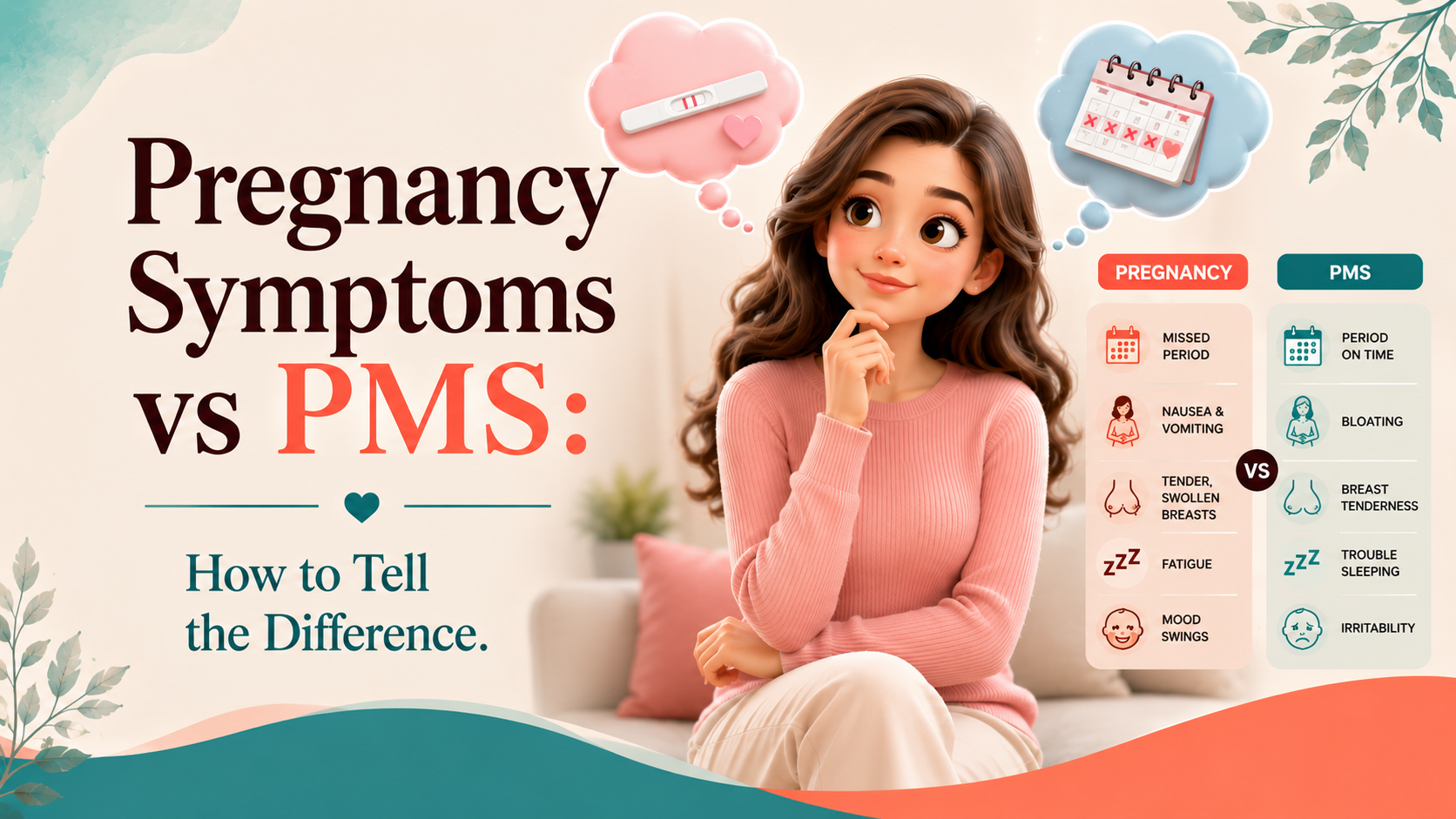
Almost every woman has had this exact moment. Your body feels a little different. Your breasts feel sore. You feel tired for no clear reason. And then the question comes. Is this PMS, or could these be pregnancy symptoms?
This confusion is completely normal. Around 90% of women with successful pregnancies experience symptoms that closely resemble PMS in the very earliest stages. This blog breaks down the real differences, gently and clearly, so you have a better sense of what your body might be telling you.
Why These Symptoms Feel So Similar in the First Place
There is a simple reason behind this overlap. Both PMS and early pregnancy are driven by changing levels of a hormone called progesterone.
In the days before your period, progesterone naturally rises and then falls again. In early pregnancy, progesterone also rises, but for a completely different reason. It continues climbing steadily to support a developing pregnancy. Because the hormone involved is so similar, many of the symptoms it creates can feel nearly identical too.
This is exactly why so many women find themselves wondering, in that quiet, uncertain week, whether their body is preparing for a period or for something else entirely.
The Symptoms That Genuinely Overlap
Several symptoms show up in both situations, which is what makes this so confusing in the first place. Here are the ones most commonly shared between the two:
- Breast tenderness — soreness or sensitivity that feels similar either way
- Mood swings — irritability, feeling emotional, or crying more easily than usual
- Fatigue — feeling tired or low on energy
- Bloating — a heavier or puffier feeling in the abdomen
- Mild cramping — light discomfort in the lower abdomen
- Headaches — can occur with both, ranging from mild to more noticeable
- Changes in appetite — cravings, aversions, or simply eating differently than usual
- Frequent urination — needing to go more often than normal
- Constipation — caused by rising progesterone levels in both cases
Because so many symptoms overlap this closely, it genuinely is not possible to tell the difference from a single symptom alone. This is completely normal, and it does not mean anything is wrong with you.
The Clues That Lean More Toward Pregnancy
While there is no guaranteed way to know without a test, some patterns tend to point a little more clearly toward early pregnancy symptoms specifically.
Persistent nausea, especially first thing in the morning, is far more associated with early pregnancy than with PMS. Light spotting that is pink or brown, often called implantation bleeding, can also be a clue, since it behaves quite differently from a regular period. It is usually much lighter, shorter, and does not build up the way a period flow does.
Noticeable breast and nipple changes, such as darkening of the areola or a stronger feeling of fullness, are also more commonly linked to early pregnancy. An increased need to urinate more frequently than usual, and a heightened sensitivity to certain smells, are also more closely tied to pregnancy than to PMS.
What Tends to Point More Toward PMS
A few patterns lean more toward PMS instead. Diarrhoea is a fairly common PMS symptom, but it is not typically associated with early pregnancy. Symptoms that ease quickly once your period begins are also more characteristic of PMS, since pregnancy-related fatigue and tenderness tend to continue rather than fade away.
Cramping that is followed by your period starting is also a stronger sign of PMS. With early pregnancy, mild cramping can happen too, but it is not followed by a regular menstrual flow.
A Simple Side-by-Side Look
| Symptom | More Common With PMS | More Common With Early Pregnancy |
| Breast tenderness | Yes, often eases once period starts | Yes, but tends to persist and feel fuller |
| Nausea | Mild, less common | Persistent, especially in the morning |
| Spotting | Period flow, builds up | Very light, pink or brown, short-lived |
| Fatigue | Improves once period begins | Tends to feel extreme and continues |
| Cramping | Followed by period | Mild, not followed by a period |
| Diarrhoea | Can occur | Not typically associated |
| Frequent urination | Less common | More commonly reported |
This table is meant only as a general guide. Every woman’s body responds a little differently, so these patterns are not absolute rules.
Timing Matters Too
One more helpful clue is simply timing. PMS symptoms usually appear one to two weeks before your period, and they fade shortly after your period starts.
Pregnancy symptoms, on the other hand, often continue and sometimes even become more noticeable as days pass, rather than disappearing. Some women report feeling early symptoms about a week before their missed period, while for others, it can take a bit longer to notice anything at all.
So, How Do You Actually Know for Sure?
Here is the honest answer that every credible medical source agrees on. The only reliable way to know for certain is to take a home pregnancy test, ideally after your missed period for the most accurate result.
If your period arrives, it is very likely PMS. If your test comes back positive, it is time to speak with your doctor to confirm the pregnancy and begin proper prenatal care. Keeping a simple note of your symptoms each month can also help you notice when something feels different from your usual pattern, which can be a useful clue in itself.
When You Should See a Doctor
While many of these symptoms are completely normal, a few situations are worth getting checked properly. Please reach out to your doctor if:
- Your periods have become irregular or absent without a clear explanation
- You experience heavy bleeding or severe pain at any point
- You have a history of pregnancy complications, such as a previous ectopic pregnancy
- Your symptoms are severe enough to interfere with your daily life
- You feel persistently anxious or unsure, and simply want clarity and peace of mind
Reaching out early is always a reasonable choice. A healthcare provider can help confirm what is happening and guide you toward the right next steps.
Final Thoughts
Telling PMS apart from early pregnancy symptoms is genuinely difficult, and that is not a reflection of you not knowing your own body well. It is simply because both conditions are driven by similar hormonal changes, creating signs that can look and feel remarkably alike.
Paying attention to timing, watching for a few specific clues like persistent nausea or light spotting, and ultimately taking a pregnancy test remain the most reliable ways to find real answers. Whatever the outcome turns out to be, you do not have to navigate this uncertainty alone, and your healthcare provider is always there to help guide you through it.
Frequently asked question (FAQs)
- Can I tell the difference between PMS and pregnancy symptoms without a test?
Not with full certainty. Some clues can offer hints, but a pregnancy test remains the only reliable way to know for sure.
- Is nausea more common with pregnancy or PMS?
Persistent nausea, especially in the morning, is more commonly linked to early pregnancy than to PMS.
- Does spotting always mean pregnancy?
Not always. Light pink or brown spotting can indicate implantation, but spotting can also happen for other reasons. A test can confirm this.
- How soon can pregnancy symptoms appear?
Some women notice symptoms about a week before a missed period, though timing can vary quite a bit from person to person.
- When should I see a doctor about my symptoms?
If your symptoms are severe, your periods are irregular without explanation, or you experience heavy bleeding or severe pain, please consult your doctor.