
Signs of Menopause and When to Talk to Your Doctor
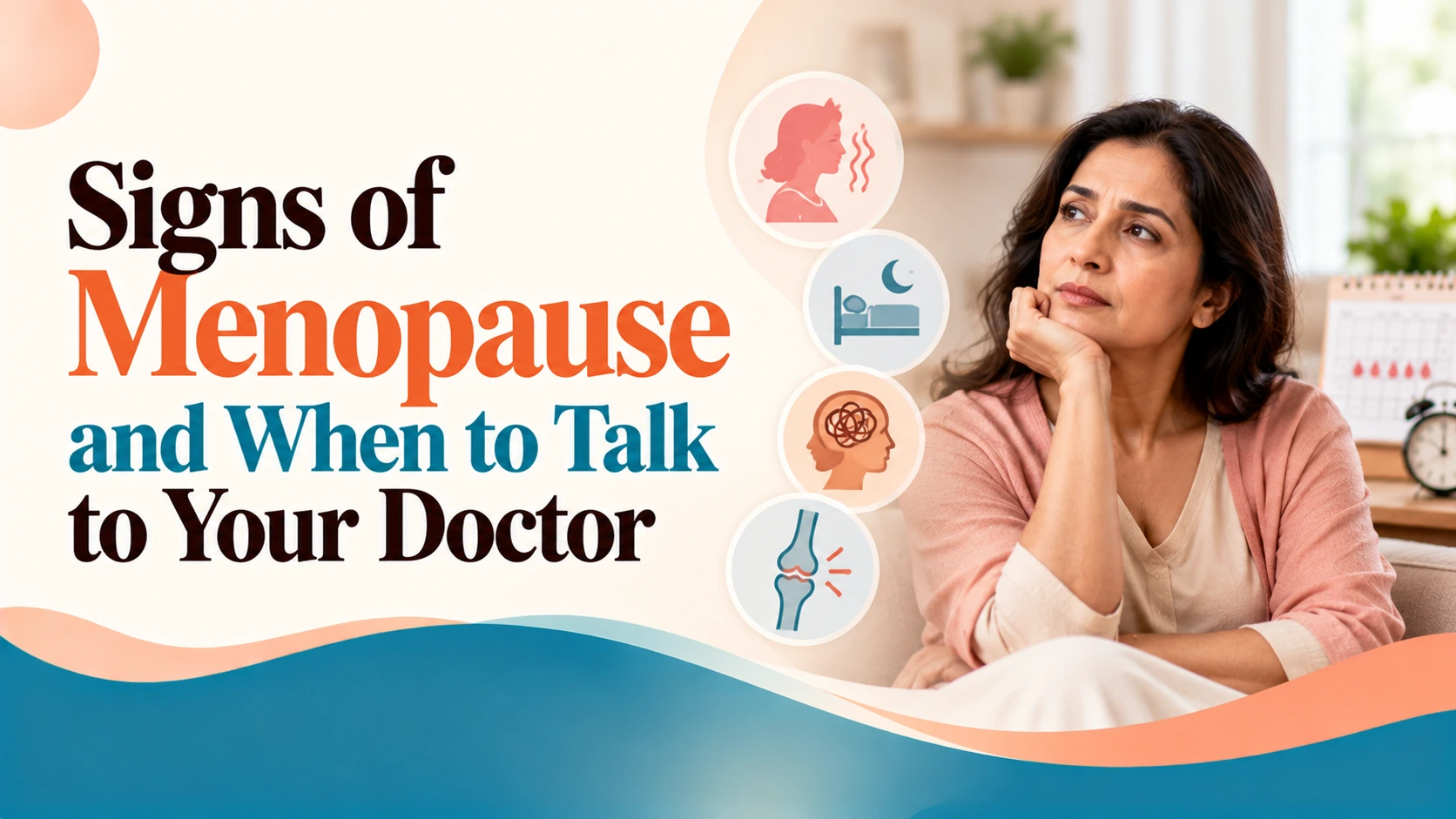
Quick Overview
Menopause doesn’t arrive overnight, it’s a gradual transition that often starts years before your last period. This blog explains the signs of menopause in simple, honest language, covering what typically happens first, which symptoms are most common, and why understanding this transition can help you feel more prepared, not more anxious.
Menopause Doesn’t Start the Day You’d Expect
Here’s something worth understanding upfront. What most people call “menopause symptoms” often actually begin during perimenopause, the transitional years leading up to menopause itself. Medically, you’re only considered to have reached menopause once you’ve gone 12 consecutive months without a period. Everything before that, including most of the noticeable signs of menopause people talk about, technically happens during perimenopause.
According to ACOG, this transition can begin as early as your 30s or 40s, with estrogen levels starting to fluctuate well before periods stop completely. Knowing this distinction helps explain why symptoms can show up gradually, sometimes for years, rather than appearing suddenly.
The First Sign of Menopause Most Women Notice
For most women, changes in the menstrual cycle are the earliest and most common sign of menopause. This might look like periods becoming longer or shorter than usual, occurring closer together or further apart, or changes in how heavy or light the flow feels. According to Mayo Clinic, this is often the very first noticeable shift, even before other symptoms begin.
It’s worth remembering that any bleeding pattern that feels genuinely unusual, not just irregular, should still be mentioned to your doctor, since abnormal bleeding can sometimes indicate something separate from the normal menopause transition.
Common Signs of Menopause You Might Experience
Beyond menstrual changes, several other signs of menopause are commonly reported. Not every woman experiences all of these, and severity varies a lot from person to person.
- Hot flashes: A sudden feeling of heat rushing through the upper body and face, often one of the most recognisable symptoms.
- Night sweats: Similar to hot flashes, but occurring during sleep, sometimes disrupting rest.
- Mood changes: Irritability, anxiety, or low mood, often linked to fluctuating estrogen levels.
- Sleep difficulties: Trouble falling or staying asleep, sometimes independent of night sweats.
- Vaginal dryness: A common but under-discussed symptom, related to declining estrogen.
- Brain fog: Difficulty with memory or concentration, which can feel unsettling but is usually temporary.
- Changes in libido: A decrease in sexual desire is commonly reported during this transition.
Signs of Menopause: A Quick Overview Table
| Sign | What It Often Feels Like |
| Menstrual changes | Periods becoming irregular, heavier, lighter, or skipped |
| Hot flashes | Sudden warmth in the face and upper body |
| Night sweats | Hot flashes occurring during sleep |
| Mood changes | Increased irritability, anxiety, or sadness |
| Sleep issues | Difficulty falling or staying asleep |
| Vaginal dryness | Discomfort or dryness, sometimes affecting intimacy |
| Brain fog | Trouble concentrating or minor memory lapses |
Why Symptoms Feel So Different From Woman to Woman
This is genuinely important to understand. Some women move through this transition with barely noticeable symptoms, while others experience several signs of menopause that meaningfully affect daily life. Research, including the long-running Study of Women’s Health Across the Nation, has found that the perimenopause stage itself can last anywhere from a couple of years to nearly a decade, and its length and intensity can vary based on individual and even population-level factors that researchers are still studying.
This variation is completely normal. There’s no single “correct” way this transition is supposed to feel.
Don’t Dismiss “Brain Fog” as Something Serious
This deserves a specific mention, since it often causes unnecessary worry. Many women experiencing memory lapses or difficulty concentrating during this transition become concerned it might signal something more serious. According to Mayo Clinic specialists, this kind of brain fog is a well-recognised, temporary part of the menopause transition for many women, not an early sign of a more serious cognitive issue. That said, if memory concerns feel severe or are impacting your daily functioning significantly, it’s still worth discussing with your doctor for personalised reassurance.
Longer-Term Health Considerations Worth Knowing
Beyond the more immediately noticeable signs of menopause, ACOG also points out that declining estrogen levels during this transition affect long-term health. This includes a period of more rapid bone loss in the years following menopause, along with a reduced natural protection against heart disease that estrogen previously provided. These aren’t things to feel alarmed about, but they’re genuinely good reasons to stay engaged with regular checkups during and after this transition.
Important Note
Please don’t assume every symptom you experience during this life stage is automatically related to menopause, or try to self-manage significant symptoms based only on online information, including this blog. Some symptoms, like unusual bleeding patterns or severe mood changes, deserve proper medical evaluation to rule out other causes. Please consult a qualified gynaecologist or women’s health specialist to discuss your specific symptoms and the most appropriate way to manage this transition for you.
Bringing It All Together
The signs of menopause often begin quietly, years before periods actually stop, starting with changes in your menstrual cycle and gradually including things like hot flashes, mood shifts, and sleep changes. Every woman’s experience with this transition looks a little different, and that’s completely normal. Understanding what’s happening, and knowing when to check in with your doctor, can make this stage feel far more manageable than facing it without any context.
Frequently Asked Questions (FAQs)
- What is usually the first sign of menopause?
Changes in the menstrual cycle, like periods becoming irregular, heavier, or lighter, are typically the earliest noticeable sign.
- At what age do signs of menopause usually begin?
The transition, called perimenopause, can begin as early as the 30s or 40s, though it varies significantly between individuals.
- Are hot flashes the only common sign of menopause?
No, other common signs include night sweats, mood changes, sleep difficulties, vaginal dryness, and brain fog.
- Is brain fog during menopause a sign of something serious?
Generally not. It’s a commonly reported, usually temporary symptom during this transition, though persistent severe concerns should be discussed with a doctor.
- When is someone officially considered to have reached menopause?
Medically, menopause is confirmed after 12 consecutive months without a menstrual period.
- Do all women experience the same signs of menopause?
No, symptoms and their intensity vary widely between individuals, and some women experience very few noticeable symptoms.
- How long does the menopause transition usually last?
The perimenopause stage can last anywhere from a couple of years to nearly a decade, depending on the individual.
- Can mood changes during menopause be linked to hormone fluctuations?
Yes, fluctuating estrogen levels during this transition are commonly linked to mood changes like irritability and anxiety.
This article is for general informational purposes only and is not a substitute for professional medical advice. Please consult a qualified gynaecologist or women’s health specialist for guidance tailored to your individual situation.