
New Reproductive Technology: What’s Trending in 2026
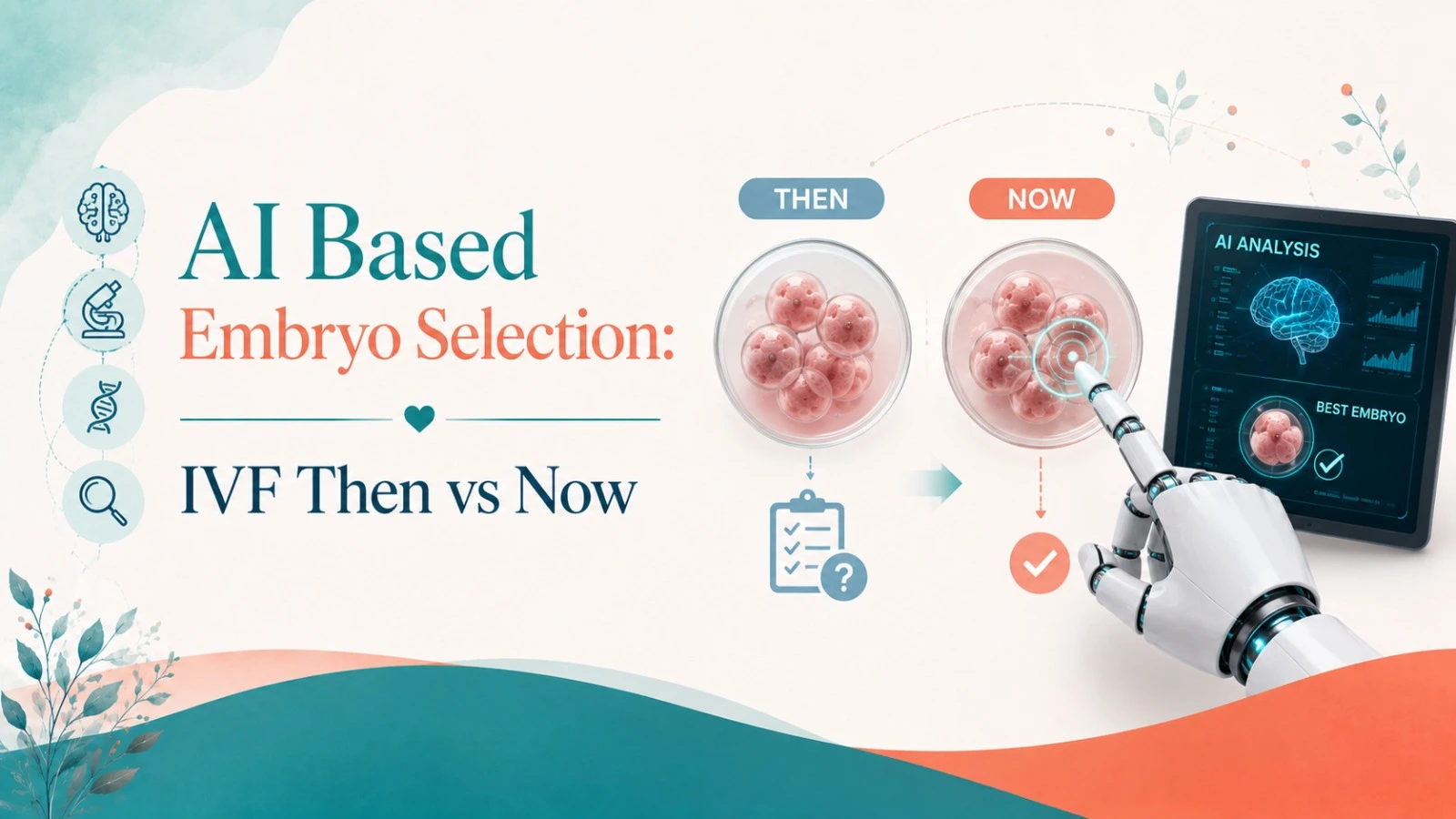
Choosing the right embryo has always been one of the most important steps in IVF. The method used to make this choice has changed quite a bit over the decades. Today, AI based embryo selection is part of that ongoing change.
This blog looks at how embryo selection used to work, how it works now, and what current research actually shows. Simple language. Honest comparisons. No exaggeration in either direction.
How Embryo Selection Used to Work
For decades, embryo selection followed largely the same approach. An embryologist would remove the embryo from the incubator, usually more than once during its development, and look at it under a microscope.
This is called a morphological assessment. The embryologist checks things like the embryo’s shape, its stage of development, and the quality of certain cell structures. Based on this visual check, they decide which embryo looks most likely to lead to a successful pregnancy.
This method has worked for a very long time, and it has helped bring millions of babies into the world. According to a major study published in Nature Medicine, this basic approach changed very little since the very first IVF birth, decades ago. It has remained largely consistent, relying mainly on the trained eye of the embryologist.
What Changed With Time-Lapse Technology
One genuine improvement came before AI even entered the picture. This was the introduction of time-lapse incubators.
Instead of removing the embryo from the incubator each time to check on it, these incubators take continuous images while the embryo stays safely inside, undisturbed. This allowed embryologists to review the embryo’s full development as a sequence of images, rather than just a few isolated snapshots taken at separate moments.
This was an important step forward. It gave embryologists more complete information, while reducing how much the embryo needed to be handled and exposed to changing conditions outside the incubator.
How AI Entered the Picture
AI based embryo selection built on top of this time-lapse technology. Instead of only being reviewed by a human eye, the continuous images captured by these incubators could now also be analysed by AI software.
These AI models are trained using large numbers of past embryo images, along with the known outcomes of those embryos, meaning whether they led to a successful pregnancy or not. Over time, the AI learns to recognise patterns linked to embryo development, cell division timing, and overall structure.
The aim of this technology is simple. Offer a more standardised, consistent way of reviewing embryos, alongside the embryologist’s own trained judgement.
So, Does AI Actually Perform Better Than the Traditional Method?
This is the most important, and most honest, question to ask. And the real research gives a balanced answer, not a one-sided one.
A significant randomised controlled trial, published in Nature Medicine, directly compared a deep learning AI model against trained embryologists using standard morphology assessment. The results showed a clinical pregnancy rate of 46.5% in the AI group, compared to 48.2% in the group using traditional manual assessment. In simple terms, this specific study did not find that AI performed better than experienced embryologists. The two methods produced broadly similar results.
This is a genuinely important finding, and it deserves to be shared honestly, rather than left out. It does not mean AI is not useful. It means AI, at least in this study, performed comparably to skilled human judgement, rather than clearly outperforming it.
Where the Research Sees Real Value Today
Other studies tell a slightly different, more specific story. A large 2021 study involving data from eighteen different IVF centres found that an AI model performed at least as well as established manual embryo selection methods, while also reducing the natural variation that comes from different embryologists assessing the same embryo differently.
More recent medical guidance also offers a balanced, practical view. According to a 2026 medical review, AI based embryo selection tends to offer more value in specific situations. For example, when a patient has several embryos that look similar in quality, AI can help add more detailed, consistent information to support that decision. However, if a patient has only one transferable embryo, this kind of ranking tool has very limited practical value, simply because there is no real choice to be made in the first place.
A Simple, Honest Comparison
| Then (Traditional Method) | Now (With AI Based Embryo Selection) |
| Manual visual check under a microscope | Continuous time-lapse images, reviewed by AI software |
| Based on a few snapshot observations | Based on a full sequence of embryo development |
| Can vary between different embryologists | Offers more consistent scoring, alongside human review |
| Well established, decades of real-world results | Comparable results so far, with some added consistency |
| Most useful when embryo choice is unclear | Most useful when comparing several similar-quality embryos |
This comparison is not meant to declare one method as completely outdated. Traditional assessment remains genuinely reliable, and AI is best understood as a thoughtful addition to it.
What This Means for Patients Today
If you are exploring IVF, here is the simple, honest takeaway. AI based embryo selection has not been clearly proven to outperform skilled, traditional embryo assessment in every study. What it does offer is added consistency, and in certain specific situations, like comparing multiple similar-quality embryos, it can genuinely support better-informed decisions.
It is also worth knowing that this technology does not replace good embryology, and it cannot resolve other factors affecting pregnancy, such as uterine conditions or hormonal factors. The most useful thing you can do is simply ask your fertility team how they currently use this technology, and how it fits alongside their own clinical expertise.
Final Thoughts
Looking at embryo selection then and now shows a story of steady, careful progress, rather than one dramatic leap. Traditional methods remain genuinely effective, refined over decades of real-world use. AI based embryo selection adds another layer of consistency on top of that foundation, supported by continuous monitoring technology that simply did not exist in earlier years.
The most accurate way to think about this today is not “old versus new,” but rather two approaches working together, each strengthening the other, as fertility science continues to move forward responsibly.
Frequently asked questions (FAQs)
- Has AI been proven to perform better than traditional embryo selection?
Not consistently. A major randomised trial found broadly similar pregnancy rates between AI and trained embryologists using standard methods.
2. Is AI based embryo selection still useful, even with these findings?
Yes, particularly when comparing several embryos of similar quality, where it can add helpful consistency to the decision.
3. Does AI help when there is only one embryo to transfer?
Not really. Ranking tools have limited value when there is no actual choice between multiple embryos.
4. Has time-lapse technology improved embryo selection on its own?
Yes. It allows continuous monitoring without disturbing the embryo, which was an important improvement even before AI was added.