
Food for Fertility Over 40: Nutrition That Actually Matters
Quick Overview
Trying to conceive after 40 comes with real biological challenges, and no diet can undo that completely. This blog looks honestly at food for fertility over 40, what nutrition can genuinely support, what it can’t fix, and which foods have real evidence behind them.
Let’s Be Honest About What Food Can and Can’t Do
Before getting into specific foods, it’s important to set the right expectations. After 40, egg quantity naturally declines, and a larger proportion of remaining eggs are more likely to have chromosomal differences. This is a biological process tied to age, and no food, however healthy, can reverse it or “repair” already affected eggs.
What research does suggest is more specific: the right nutrition, especially in the months leading up to conception, may help support the health of eggs that are still maturing, by reducing oxidative stress in the ovarian environment. This is a genuinely useful, evidence-backed role for food for fertility over 40, just a more realistic one than many headlines suggest.
Why Oxidative Stress Matters So Much at This Age
Here’s the science in simple terms. As cells age, including egg cells, they accumulate more oxidative damage from unstable molecules called reactive oxygen species. Research has linked higher oxidative stress with reduced egg quality, while diets richer in antioxidants have been associated with better fertility outcomes in several studies. This is exactly why antioxidant-rich food for fertility over 40 gets so much attention from fertility nutritionists.
Since egg maturation happens over roughly a three-month window before ovulation, many specialists suggest that consistent nutrition during this period, rather than a last-minute change, is what genuinely matters.
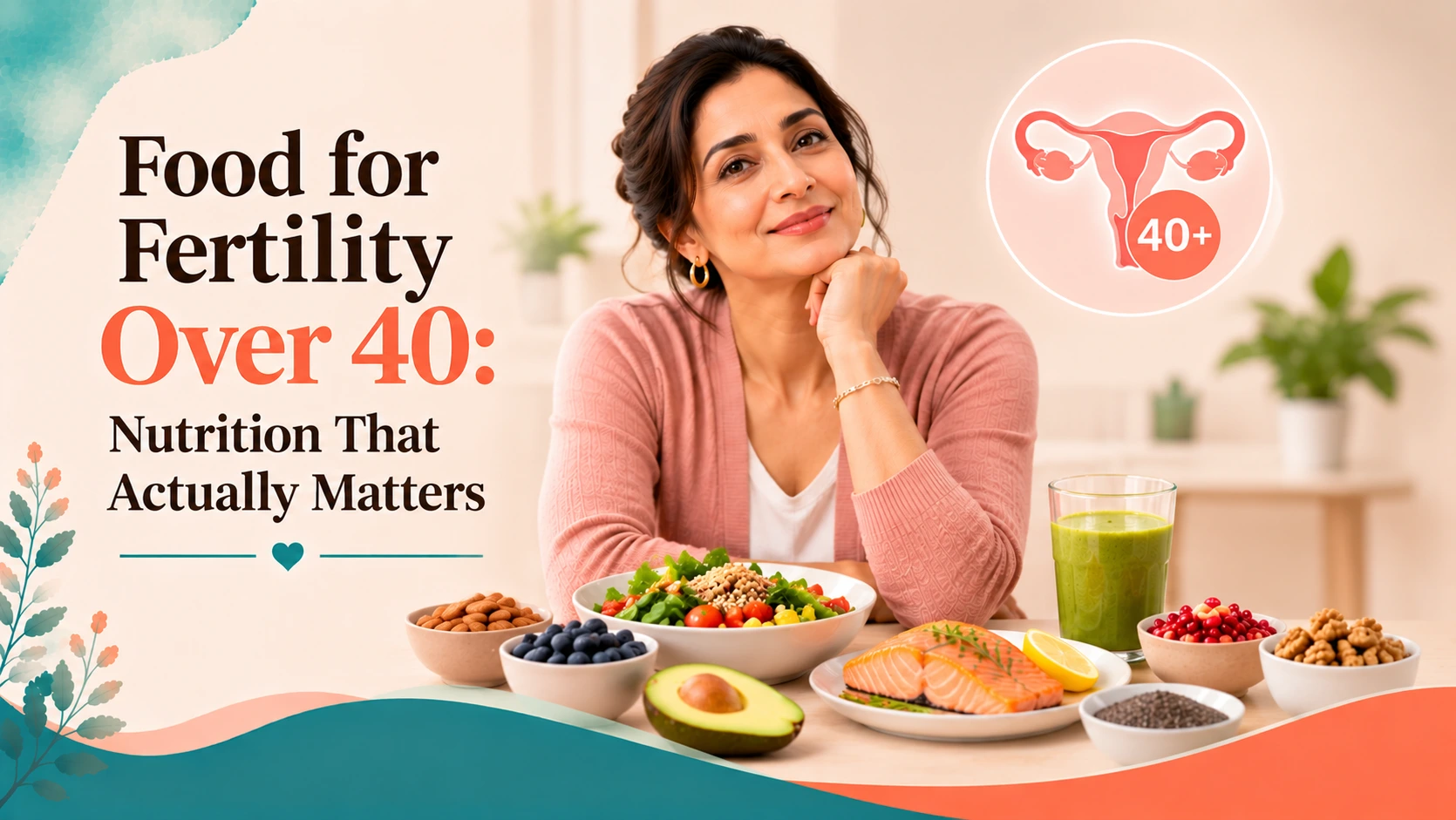
Food for Fertility Over 40: Foods Worth Prioritising
Based on current research, here are food groups with genuine supporting evidence:
- Dark leafy greens: Spinach, kale, and similar vegetables are rich in folate, which has been linked to better egg maturation and higher ovarian reserve markers.
- Berries: Blueberries, strawberries, and blackberries contain antioxidants that could reduce oxidative stress in ovarian tissue.
- Oily fish and healthy fats: Foods such as salmon, walnuts, and olive oil contain omega-3 fats which have been linked to good egg quality.
- Selenium-rich foods: These include foods such as Brazil nuts and eggs and are important in creating a conducive environment for egg formation especially when there is low ovarian reserve.
- Whole grains and legumes: Legumes and whole grains provide nutrition support for hormone production and stable blood sugar levels.
Food for Fertility Over 40: A Quick Overview Table
| Food Group | Why It’s Included | Examples |
| Leafy greens | Rich in folate, linked to egg maturation | Spinach, kale |
| Berries | High in antioxidants, may reduce oxidative stress | Blueberries, strawberries |
| Healthy fats | Omega-3s linked to egg quality support | Salmon, walnuts, olive oil |
| Selenium sources | Supports ovarian environment | Brazil nuts, eggs |
| Whole grains | Supports stable blood sugar and hormone balance | Oats, quinoa, lentils |
What the Research Says About a Mediterranean-Style Diet
Among all dietary patterns studied, a Mediterranean-style diet, rich in vegetables, healthy fats, whole grains, and lean protein, currently has the strongest evidence base for supporting fertility at any age, including after 40. This isn’t about one “superfood,” it’s about a consistent overall pattern, which appears to matter more than any single ingredient.
Foods and Habits Worth Limiting
Just as some foods can help, certain habits are worth reducing when thinking about food for fertility over 40:
- Ultra-processed foods and refined sugar, which can increase inflammation
- Trans fats, commonly found in fried and heavily processed snacks
- Excess alcohol, which research links to reduced egg quality, an effect that appears more pronounced with age
- High caffeine intake, generally recommended to be limited to one to two cups daily
Should You Take Supplements Too?
This is a common question, and it’s worth addressing carefully. Some research supports specific supplements, like CoQ10, particularly for women with diminished ovarian reserve, alongside a healthy diet. However, supplements aren’t a replacement for a fertility-supporting diet, and the right choice, dosage, and necessity genuinely depend on your individual health profile, including test results like AMH levels.
Important Note
Please don’t rely on diet or supplements alone if you’re facing fertility problems after 40, or delay a proper fertility evaluation based on the hope that nutrition changes will be enough on their own. While good nutrition can genuinely support egg health, it works best alongside medical guidance, not as a substitute for it. Please consult a qualified fertility specialist to assess your individual ovarian reserve and discuss the most appropriate path forward for your specific situation.
Closing words
Food for fertility over 40 has a real, evidence-based role, mainly in supporting the health of eggs still maturing by reducing oxidative stress, rather than reversing the natural decline in egg quantity that comes with age. A consistent, antioxidant-rich, Mediterranean-style diet currently has the strongest evidence behind it. Pairing this kind of nutrition with proper medical evaluation gives you the most realistic and informed approach to fertility after 40.
Frequently Asked Questions (FAQs)
- Can food for fertility over 40 reverse age-related egg decline?
No, diet cannot reverse the natural decline in egg quantity or chromosomal changes linked to age, but it may help support the health of eggs still maturing.
- What is the best overall diet pattern for fertility after 40?
A Mediterranean-style diet, rich in vegetables, healthy fats, and whole grains, currently has the strongest evidence base for supporting fertility.
- Why is antioxidant-rich food important after 40?
Antioxidants may help counter oxidative stress, which increases with age and has been linked to reduced egg quality.
- How long before trying to conceive should diet changes start?
Since eggs mature over roughly three months before ovulation, consistent nutrition during this window is often considered most relevant.
- Are supplements necessary alongside a fertility-supporting diet?
Not necessarily for everyone. Some research supports specific supplements like CoQ10, but this depends on individual factors best assessed by a specialist.
- Can men’s diet also matter when both partners are over 40?
Yes, male fertility also declines with age, and nutrition supporting sperm health becomes especially relevant in these cases.
- Is there one “superfood” for fertility over 40?
No, research points more toward an overall consistent dietary pattern rather than any single food providing significant benefit alone.
- Should I get any tests before making significant diet or supplement changes?
Yes, tests like AMH levels and antral follicle count can help assess your individual ovarian reserve and guide appropriate next steps.
This article is for general informational purposes only and is not a substitute for professional medical advice. Please consult a qualified fertility specialist for guidance tailored to your individual situation.