
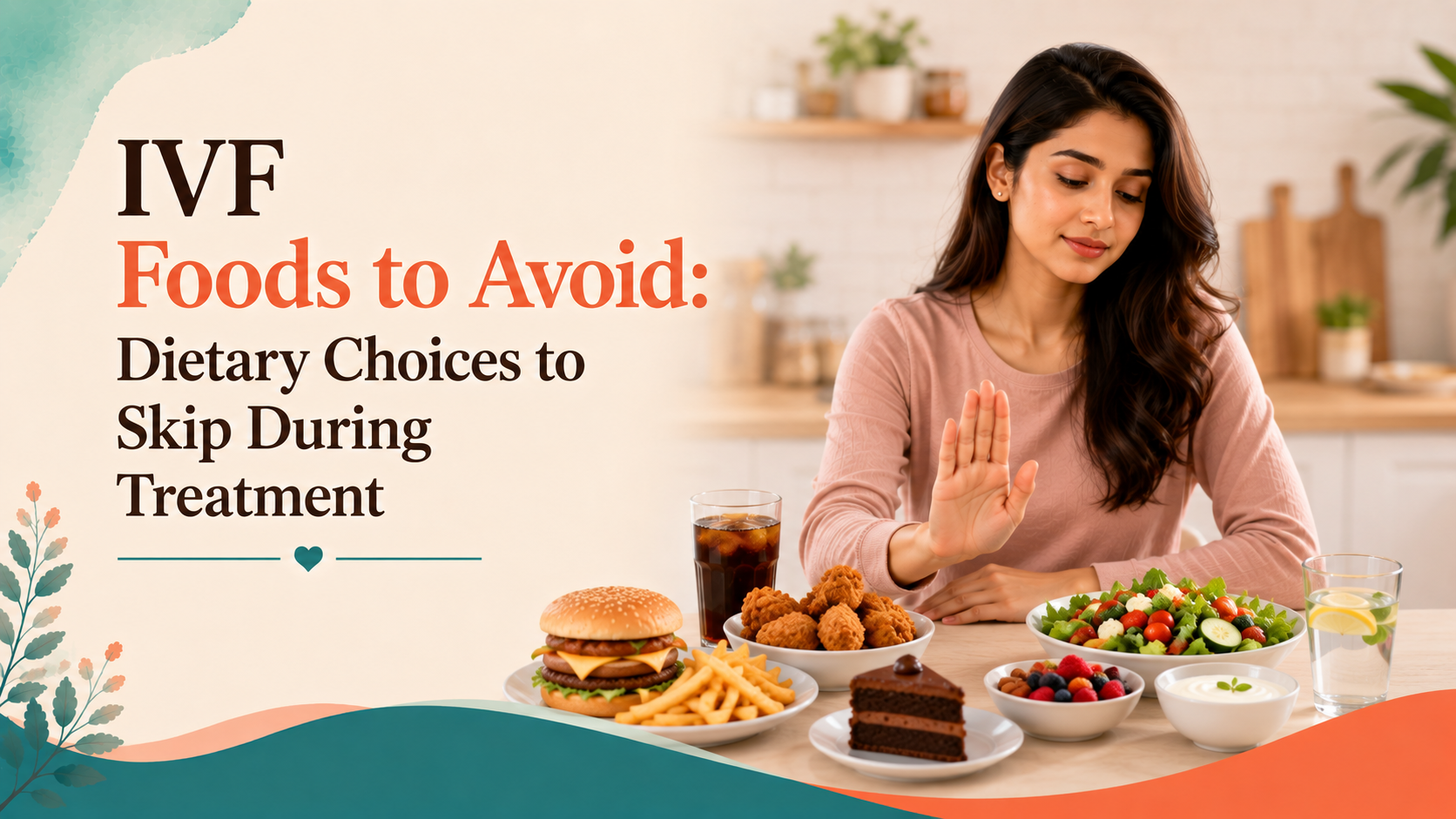
IVF foods to avoid: Dietary Choices to Skip During Treatment
Quick Overview
This blog includes information on IVF foods to avoid during IVF treatment, that includes alcohol, raw foods, high-mercury fish, caffeine and more. It also explains what to eat during IVF, food safety after embryo transfer, and whether diet can actually affect IVF success.
Introduction
Foods play an important role in overall health during an IVF journey. While no food can guarantee IVF success, eating a healthy diet can support general health and help the body with its nutritional needs during treatment.
At the same time, several foods and drinks are avoided during IVF journey, because of concerns of food safety, excessive sugar, unhealthy fats, etc.
Why Does Diet Matter During IVF?
IVF involves multiple stages such as stimulation, egg retrieval, fertilization, embryo development and embryo transfer. During this period, the body goes through several hormonal and physical changes and a healthy diet provides required nutrients.
A healthy diet provides important nutrients such as protein, fiber, minerals, vitamins and healthy fats. However, it is important to understand that diet alone does not determine IVF success. Factors such as age, egg quality, sperm health, reproductive health, embryo quality, etc also play a major role. People must know IVF foods to avoid that could help in pregnancy.
The goal should be to follow a balanced diet rather than focusing on single fertility food.
Foods To Avoid During IVF
There are multiple IVF foods to avoid. Those are:
-
Alcohol
Alcohol must be avoided during fertility treatment, especially around embryo transfer and when pregnancy is around.
Regular alcohol consumption can affect overall health and may have a negative impact on fertility. Once pregnancy is confirmed, alcohol must be avoided fully as there is no known amount of alcohol during pregnancy.
-
High-Mercury Fish
Fish is an excellent source of energy that contains omega-3 fatty acids and protein but some fish contain high levels of mercury.
High mercury exposure can be harmful during pregnancy and can damage the developing nervous system.
Examples of fish that should be avoided during IVF treatment. Those are:
- Marlin
- Swordfish
- Shark
- King mackerel
- Orange roughy
You need not to stop eating all the fish during IVF treatment. You can choose fish with lower mercury that can help in providing required nutrients to the body.
-
Raw or undercooked seafood
Raw or undercooked seafood may contain harmful bacteria, viruses or parasites.
Some of the examples are:
- Raw fish
- Sushi containing raw seafood
- Raw shellfish
- Undercooked prawns
During IVF, especially after embryo transfer and when pregnancy is possible, choosing properly cooked seafood is a safer option. One must know IVF foods to avoid during treatment or pregnancy.
-
Raw or undercooked meat
Raw or undercooked meat could contain microorganisms that could cause foodborne illness.
During fertility treatment and early pregnancy, it is better to eat proper cooked meat. Avoid dishes containing raw or undercooked meat, and make sure meat is stored and handled safely..
-
Unpasteurized milk and dairy products
Unpasteurized milk and products made from it may contain Listeria. Choose pasteurized milk, yogurt, cheese and other dairy products during IVF or pregnancy.
Always check food labels when you are unsure whether the product is pasteurized.
-
Raw eggs and foods containing them
Raw or undercooked eggs can carry salmonella. During IVF and early pregnancy, it’s safer to consume properly cooked eggs.
Be cautious with foods that may contain raw eggs such as homemade mayonnaise, raw cookie doughs or some dessert.
-
Processed and highly packaged food
Highly processed foods are high in sugar, salt, refined carbohydrates and unhealthy fats while providing fewer essential nutrients.
Examples include:
- Chips
- Packaged snacks
- Sugary cereals
- Instant noodles
- Fast food
Eating these occasionally is unlikely to affect IVF, but making it a regular habit can make it harder to maintain a balanced diet.
-
Foods high in added sugars
Excessive intake of sugary foods and drinks can contribute to excessive calorie intake and blood sugar fluctuations.
Limit foods such as:
- Soft drinks
- Candy
- Cakes
- Pastries
- Cookies
You do not need to completely eliminate naturally occurring sugars in fruits and dairy products. Focus mainly on reducing foods and beverages with large amounts of added sugar.
-
Excessive caffeine
Caffeine does not have to be necessarily eliminated during IVF, but excessive consumption is not recommended, especially when pregnancy is confirmed. Caffeine could be found in coffee, tea, cola, energy drinks, etc.
Several pregnancy guidelines suggest keeping caffeine intake to 200 mg/day or less during pregnancy.
-
Unwashed fruits or vegetables
Fresh fruits and vegetables are the most important part of a balanced diet, but they should be washed properly before eating.
Unwashed produce may carry microorganisms from soil or handling.
These were some IVF foods to avoid that can help in enhancing your IVF treatment.
What to eat during IVF treatment?
Instead of concentrating on IVF foods to avoid, you should focus on creating a balanced diet.
You should include:
- Protein: Choose eggs, beans, lentils, dairy products, chicken, fish which are low in mercury in your diet.
- Fruits and vegetables: Include fruits and vegetables in your diet to obtain vitamins, minerals, fiber, etc.
- Whole grains: Brown rice, oats, whole-wheat roti could provide fiber and other essential nutrients.
- Healthy fats: Nuts, seeds, avocados, and suitable vegetable oils can provide unsaturated fats.
- Plenty of fluids: Water is an important part of maintaining hydration. Your individual fluid needs may vary depending on your health, activity level, and treatment.
As we keep a track on IVF foods to avoid, it is also important that a proper nutritious food should be consumed during IVF treatment.
Conclusion
Knowing IVF foods to avoid could help you make safer and healthier choices throughout the treatment. Alcohol, raw foods, highly processed foods, unpasteurized dairy products, excessive caffeine, etc must be avoided during IVF treatment or pregnancy.
At the same time, there is no need to follow an unnecessarily restrictive diet. A balanced eating pattern that includes vegetables, fruits, whole grains, protein, healthy fats, and adequate fluids is a sensible approach.
Frequently Asked Questions(FAQs)
- What are those IVF foods to avoid?
Raw eggs, undercooked food, highly processed foods, alcohol, excessive caffeine, etc are some of the IVF foods to avoid during IVF treatment or pregnancy.
2. Can food affect IVF success?
Diet can support overall health, but no particular food or diet can guarantee IVF success. IVF outcomes depend on many medical and biological factors.
3. Should I avoid fish during IVF?
No. Fish can provide protein and omega-3 fatty acids. Choose low-mercury varieties and avoid fish known to contain high mercury levels.
4. Why is alcohol discouraged during IVF?
Alcohol is best avoided because pregnancy may occur during treatment, and there is no known safe amount of alcohol during pregnancy.
5. Which dairy products are safer during IVF?
Choose pasteurized milk, yogurt, and cheese. Avoid unpasteurized dairy products because of the risk of harmful bacteria.